First, work out which list your home is on
Heritage homes in Tasmania can be listed in two ways, and the rules differ. Council-listed places and precincts sit in the local planning scheme. Places on the Tasmanian Heritage Register are protected by the Heritage Council under state law. Some homes are on both. Check before you choose colours or book a painter.
Council listing. Each council's Local Provisions Schedule under the Tasmanian Planning Scheme lists local heritage places and precincts. In the City of Hobart, the Hobart Local Provisions Schedule (effective 22 October 2025) lists 76 local heritage precincts, from Battery Point to streets in New Town, Sandy Bay, West Hobart, North Hobart and Lenah Valley, plus a long list of individual places.
Tasmanian Heritage Register. Works to places on the state register need the approval of the Tasmanian Heritage Council. Your council can tell you if your property is on either list, and Heritage Tasmania's advisors give free advice on 1300 850 332.
Repainting a council-listed home
For council-listed places and precincts, a like-for-like repaint is exempt from a planning permit. The Tasmanian Planning Scheme's Local Historic Heritage Code lists "repainting or re-rendering of an exterior surface that has been previously painted or rendered, in a colour similar to the existing" as exempt development.
That exemption has limits. A noticeably different colour scheme is not "similar to the existing", and painting brick or stone that has never been painted is not a repaint. Either can need a planning permit. The code also exempts maintenance and repairs that do not remove, replace or conceal external building fabric, but replacing weatherboards or verandah detail is a different matter. If in doubt, ask your council before work starts, and check the current version of the code, as planning provisions are amended from time to time.
Repainting a home on the Tasmanian Heritage Register
Registered places need Heritage Council approval for repainting, even like-for-like. For simple repainting that fits the place's character, the approval is a minor works approval, which Heritage Tasmania describes as covering works such as painting that do not affect heritage values. Bigger changes need a discretionary permit through your council.
The Heritage Council's Works Guidelines (Version 2, October 2025) say a minor works approval can cover painting previously painted surfaces where three conditions are met: the colour scheme suits the character of the place, the original types of materials and methods are used and no new texture coatings are applied. A discretionary permit is needed for:
- colour scheme changes, including roof colour, that are not in keeping with the heritage character
- painting historic surfaces that have not been painted before, including masonry and clear-finished joinery
- refinishing historic timber floors or joinery with a modern chemical finish such as polyurethane
Before 1 January 2025, a minor works approval was called a certificate of exemption. For places in the City of Hobart, Heritage Tasmania says minor works applications can be lodged online through PlanBuild Tasmania. Even with a minor works approval, you may still need council approval under the planning scheme.
The guidelines are firm on compliance: carrying out works on a registered place without approval is an offence, with penalties of up to 5,000 penalty units for an individual.
Choosing colours for a heritage home
Heritage colours do not have to be dull, but they should suit the era of the house. The Heritage Council advises avoiding "overtly contemporary colour schemes", such as stark black, grey and white, which are often not compatible with traditional schemes. Many owners research the original scheme first.
Useful approaches:
- look for original paint layers in protected spots, such as behind hardware or under later trim, and ask the painter to expose a small sample
- choose a scheme that suits the era and style of the house
- keep unpainted brick and stone unpainted
- use traditional clear finishes rather than polyurethane on historic timber
The Heritage Council advises against painting unpainted brick, stone or clear-finished timber, because paint can be difficult to remove and can trap moisture that damages masonry. Where a breathable finish helps, it suggests lime washes and mineral silicate paints.
Preparing old weatherboards safely
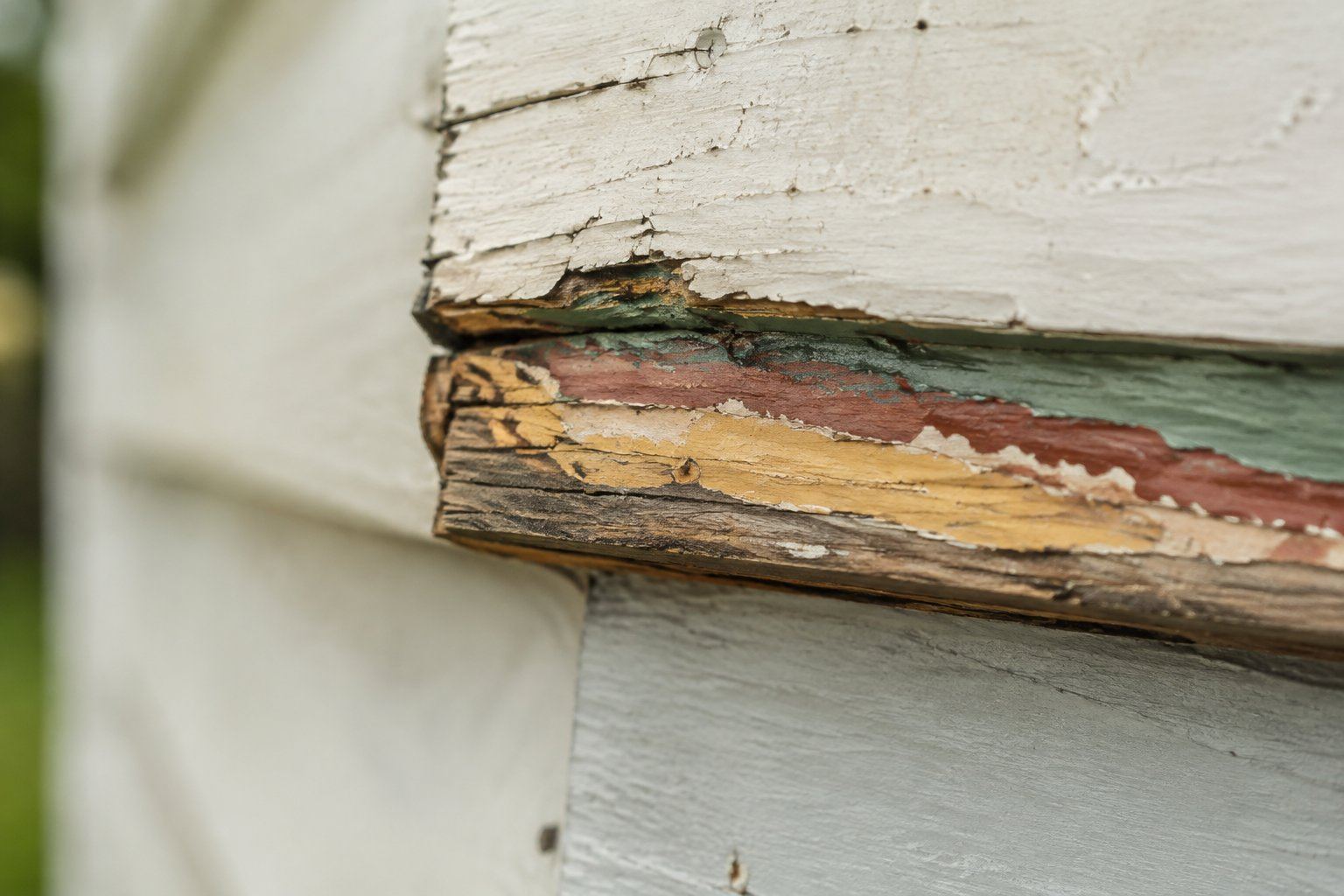
Most of the cost in a heritage repaint is preparation, and on old timber that usually means dealing with lead paint. The Lead Alert guide says homes built before 1970 are most at risk, and lead "pink primer" was used as an undercoat on exterior timbers and even as a topcoat on weatherboards.
Lead Alert also notes that red-lead primer was often used on timber window sills and exposed timber well into the 1970s. It sets out safer methods:
- Wet scraping. Wet the surface with a spray bottle and scrape onto plastic sheeting.
- Wet sanding. Wet the paint and use wet and dry sandpaper, never a dry power sander.
- Low-temperature heat. Electric heat guns can soften thick paint on flat surfaces, but nozzle temperatures should stay below 370°C, because lead fumes form at higher temperatures. Open-flame torches are especially dangerous.
- No dry abrasive blasting or dry sanding.
For registered places, the Works Guidelines add that paint removal should avoid harsh abrasives that could damage heritage fabric and be done by suitably qualified and experienced contractors. Removing paint to reveal originally bare surfaces is itself a works item that needs approval.
Repairs before painting
Paint only lasts as long as the timber under it. Old weatherboards, sills, verandah boards and decorative brackets often have rot at joints and ends. The Works Guidelines quote the Burra Charter principle of doing "as much as necessary but as little as possible", and define like-for-like as matching the existing fabric in materials, dimensions and profiles.
Ask the painter to identify rotten or split timber during the quote, and whether a carpenter is needed. On a registered place, check whether the repair work needs its own approval before it starts.
Questions to ask a painter about a heritage job
Not every painter works on heritage homes regularly. Ask about their approach to preparation, lead paint and colour. Ask too whether they have worked with Heritage Tasmania or council heritage requirements before. A clear written scope protects both you and the house.
- How will you test for lead paint, and which removal methods will you use?
- Will you do a colour investigation or expose a sample of original paint?
- Which primers and topcoats will you use on old timber?
- How will you handle rotten or damaged boards?
- Are you licensed and insured? Check any licence on the CBOS register.
- Can you work around an approval timeline if one is needed?
Get a quote
Request a quote and we will pass your job to a local Hobart painter, who will contact you within one business day. Mention in your request that the house is heritage listed. painters-hobart.com.au is an independent referral service, not a painter.
Sources
- Tasmanian Planning Scheme, State Planning Provisions, C6.0 Local Historic Heritage Code (copy published by Kingborough Council, December 2022)
- Tasmanian Planning Commission, Hobart Local Provisions Schedule, effective 22 October 2025
- Tasmanian Heritage Council, Works Guidelines for historic heritage places, Version 2, October 2025
- Heritage Tasmania, Getting Approval (accessed 1 October 2026)
- Australian Government, Lead Alert: The six step guide to painting your home, 5th edition, 2016